Backroads and the Power of Collective Conservation
Many adventure travel companies have built conservation into their business model. They've launched giving programs, invested in sustainable operations, and supported local communities in the places they operate. This individual company action matters deeply. But what Backroads has discovered through their membership with the Adventure Travel Conservation Fund (ATCF) is that this work becomes exponentially more powerful when connected to a broader industry movement. Their story illustrates an important truth: individual stewardship and collective mobilization aren't competing approaches. They're complementary forces that, when aligned, create the conditions for meaningful conservation at scale.

Individual Stewardship: What Backroads Does
Since 1979, supporting local communities has been core to Backroads' mission. Over the past several years, they've formalized and expanded those efforts: reducing operational waste, strengthening sustainable practices, and investing directly in the communities where they operate.
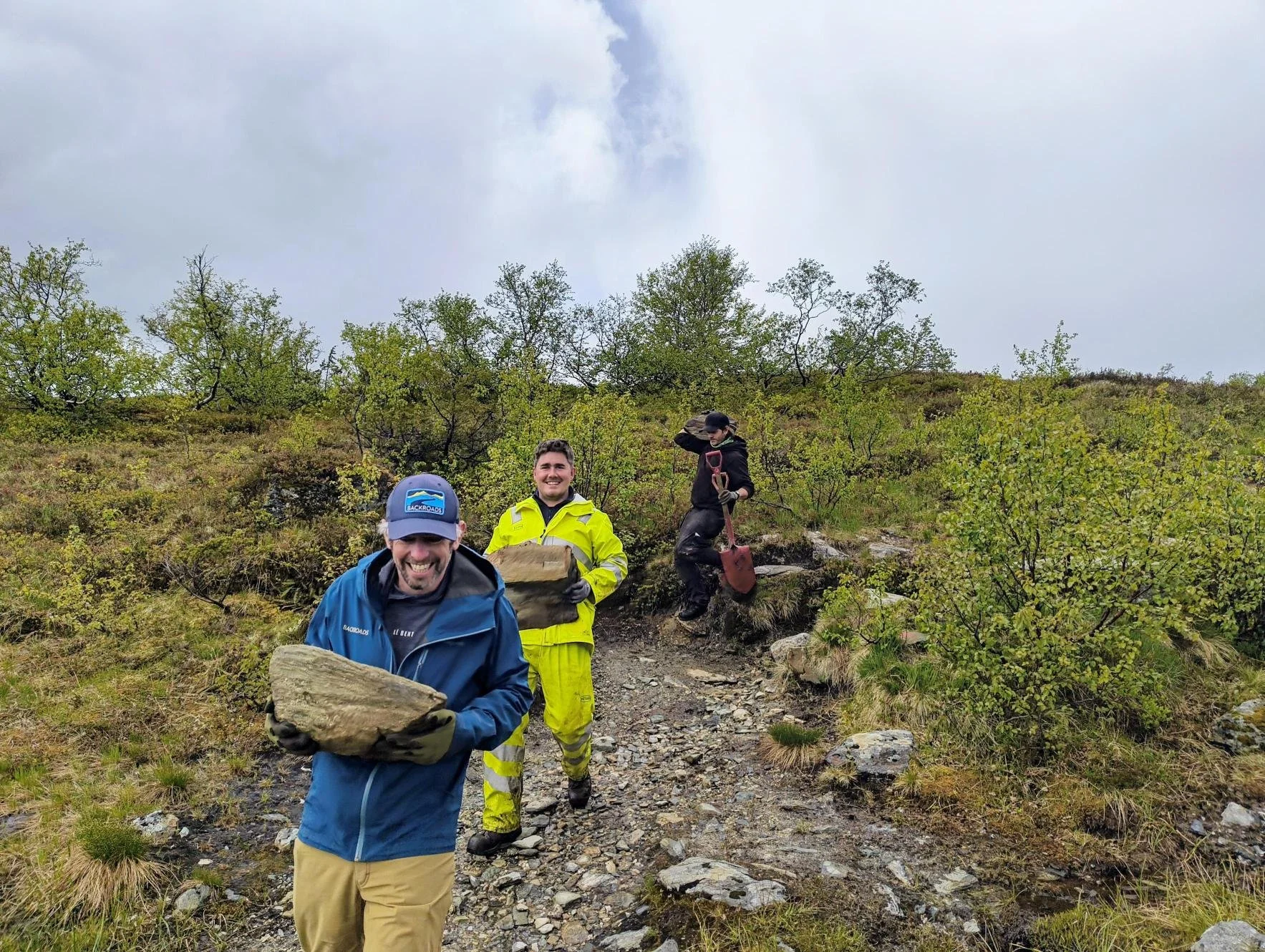
Norway – Trail Maintenance: Backroads Trip Leaders and Field Staff worked alongside local partners to restore trails near Voss, improving conditions for both the community and guest experience. The project addressed immediate trail degradation while reinforcing long-term relationships in the region. Photo Credit: Backroads
In 2025, Backroads launched the Give Back Program, empowering trip leaders to lead or amplify local volunteer and community initiatives. In just the first year, Backroads supported 20 projects across 16 countries, contributing more than 500 volunteer hours and $32,000 in community donations.
Beyond community work, Backroads has expanded composting and recycling systems, diverted more than 2,700 pounds of retired gear from landfills through TerraCycle partnerships, and continued investing in solar infrastructure and electrified portions of their van fleet.
This is meaningful work. And… Backroads recognizes something important: no single company can solve the conservation challenges facing travel destinations alone.
The Collective Advantage: Why Does This Matter?
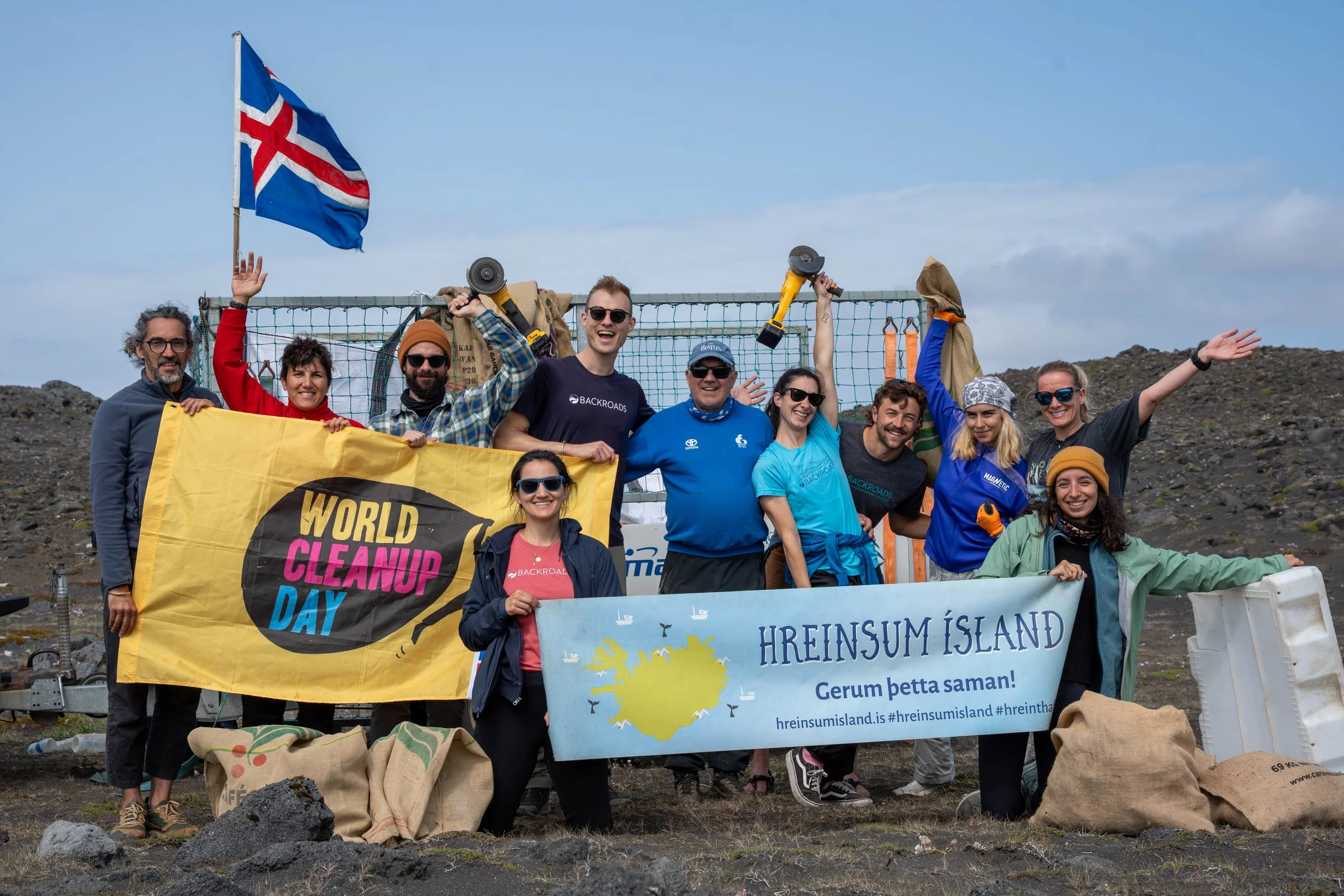
Iceland: In Grindavík, Backroads Trip Leaders and Field Staff joined Blue Army to remove 440 lbs of waste from the coastline, supporting Iceland’s unique ecosystems and strengthening local community ties. Photo Credit: Backroads
This is where the ATCF comes in. When Backroads joined as a Founding Member in 2017, they gained the ability to contribute not only through their own programs, but also through collective industry support for vetted grassroots conservation projects worldwide. Their individual efforts were amplified by the scale, expertise, and coordinated action of 200+ adventure travel businesses working toward the same goal.
"Being part of ATCF allows us to contribute to projects and partnerships beyond the direct footprint of our own operations. It creates opportunities for shared learning and stronger alignment around what responsible adventure travel should look like as an industry." Julia Cope, Senior Impact Specialist at Backroads, explains.
The ATCF brings together a broad coalition to invest in environmental protection and community resilience at a scale that individual companies often cannot achieve alone. Conservation work isn't fragmented or performative, but connected to credible grassroots efforts and shared accountability across the adventure travel community.
The Broader Imperative

Cuba: Community Arts Ride: A Backroads-supported community arts bike tour brought cyclists and artists together to travel across eastern Cuba, hosting workshops, performances, and mural projects with local youth. Over three weeks, the group engaged more than 200 participants, using bikes as tools for creativity, connection, and community impact. Photo Credit: Backroads
As travel companies face growing environmental pressures, climate risks, and evolving guest expectations, collaboration across the industry becomes essential. Guests increasingly expect travel companies to demonstrate authentic community partnerships, environmental responsibility, and stewardship of the places they visit.
Backroads' story illustrates a critical truth. That individual company action creates the foundation for change, and collective action amplifies the reach and scale. When adventure travel businesses unite around conservation (sharing knowledge, pooling resources, and supporting vetted projects together) they create the conditions for transformative change.
A Model for Other Companies
If your company has its own giving program or conservation initiatives, Backroads' example offers an important lesson. The work you're already doing matters. AND when you connect that work to a broader industry movement through ATCF, you amplify impact and help shift how the entire adventure travel sector approaches conservation.
When companies like Backroads align their individual efforts with the broader industry movement through ATCF, that's when real change happens.