
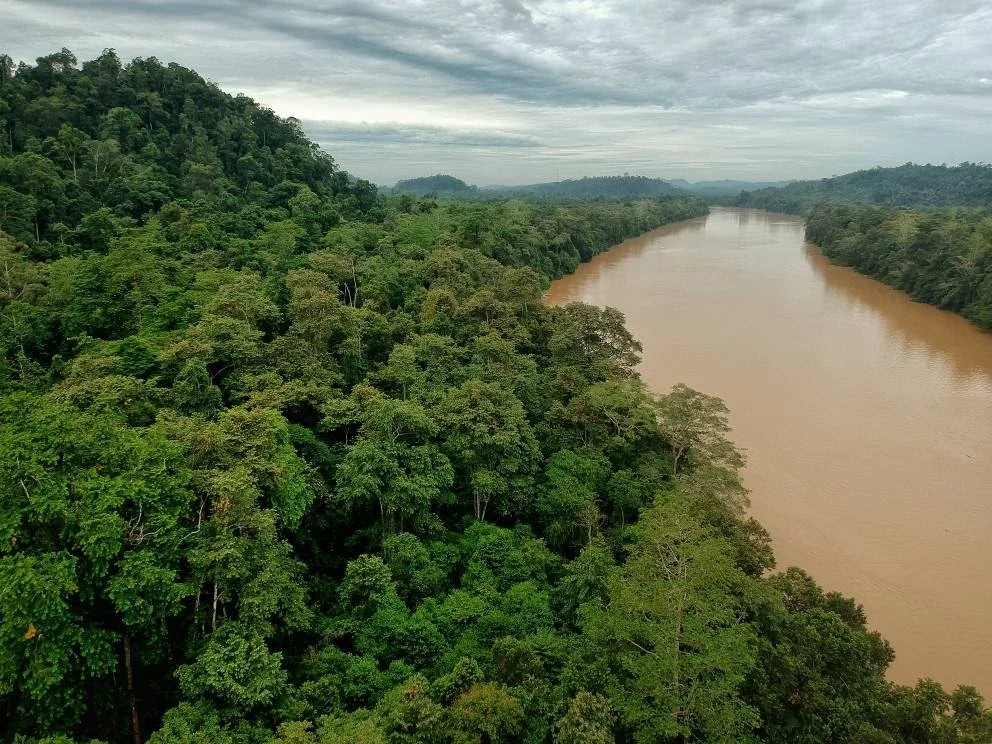
RECONNECTING WILDLIFE CORRIDORS | ANIMAL PROJECTS & ENVIROMENTAL EDUCATION
SUKAU, MALAYSIA
2026 BALLOT FINALIST | NOMINATED BY STICKY RICE TRAVEL


This project restores degraded rainforest in the Lower Kinabatangan Wildlife Sanctuary to reconnect critical wildlife corridors for endangered orangutans, pygmy elephants, hornbills, and other threatened species. By combining habitat restoration with local employment, community partnerships, and ecotourism, the project strengthens one of Borneo's most iconic wildlife destinations while supporting long-term conservation and local livelihoods.
The Issue:
The Lower Kinabatangan Wildlife Sanctuary has been heavily fragmented by decades of logging and agricultural expansion, leaving wildlife isolated in disconnected forest patches. This habitat fragmentation threatens endangered species such as orangutans, pygmy elephants, and hornbills by limiting their ability to move, feed, and breed. The project addresses the root cause by restoring degraded rainforest and reconnecting fragmented habitat into continuous wildlife corridors. At the same time, it creates long-term community involvement through local employment, conservation-focused tourism, and environmental education, helping ensure the restored forests remain protected.
What are Measurable Outcomes Expected from the Funding of this Project?
1,000 native trees planted with high survival rates to restore degraded rainforest habitat.
Increased wildlife presence, demonstrated through more sightings and other evidence of species returning to restored forest corridors.
Four local community members employed in part-time restoration work for 11 months, expanding conservation-linked livelihoods.
What Would a Successful Project Result In?
A restored rainforest corridor that reconnects fragmented habitat, supports healthier populations of endangered wildlife, creates lasting employment for local communities, and strengthens the Lower Kinabatangan as a world-class ecotourism destination.